
The Long Way Around: Pro Pet Sitter and Cyclist Melissa Teeple on Life in Motion
After a career-altering injury, the former triathlete hit the road solo, traveling the world by bike and by instinct. Her story is one of grit, grace, and radical softness.

Hello, cycling fans,
Women’s History Month wraps up this week, and I’ve been thinking a lot about the women who quietly expand what’s possible—not just in sports but in how they choose to live and move through the world. After my Q&A with Linette Messina sparked a wave of reads and replies (Thank you!), I wanted to share one more story that’s stayed with me.
Melissa Teeple is a former triathlete, a bike traveler and adventurer, and a fiercely thoughtful human who’s built an unconventional life around motion, meaning, and care—both for herself and the animals (and people) she meets along the way. I admire her deeply. Her story is about chasing freedom, rebuilding after injury, and choosing softness in a world that rewards hard edges.
You’re going to want to sit with this one. Enjoy. –Rosael
The Long Way Around: A Conversation with Melissa Teeple
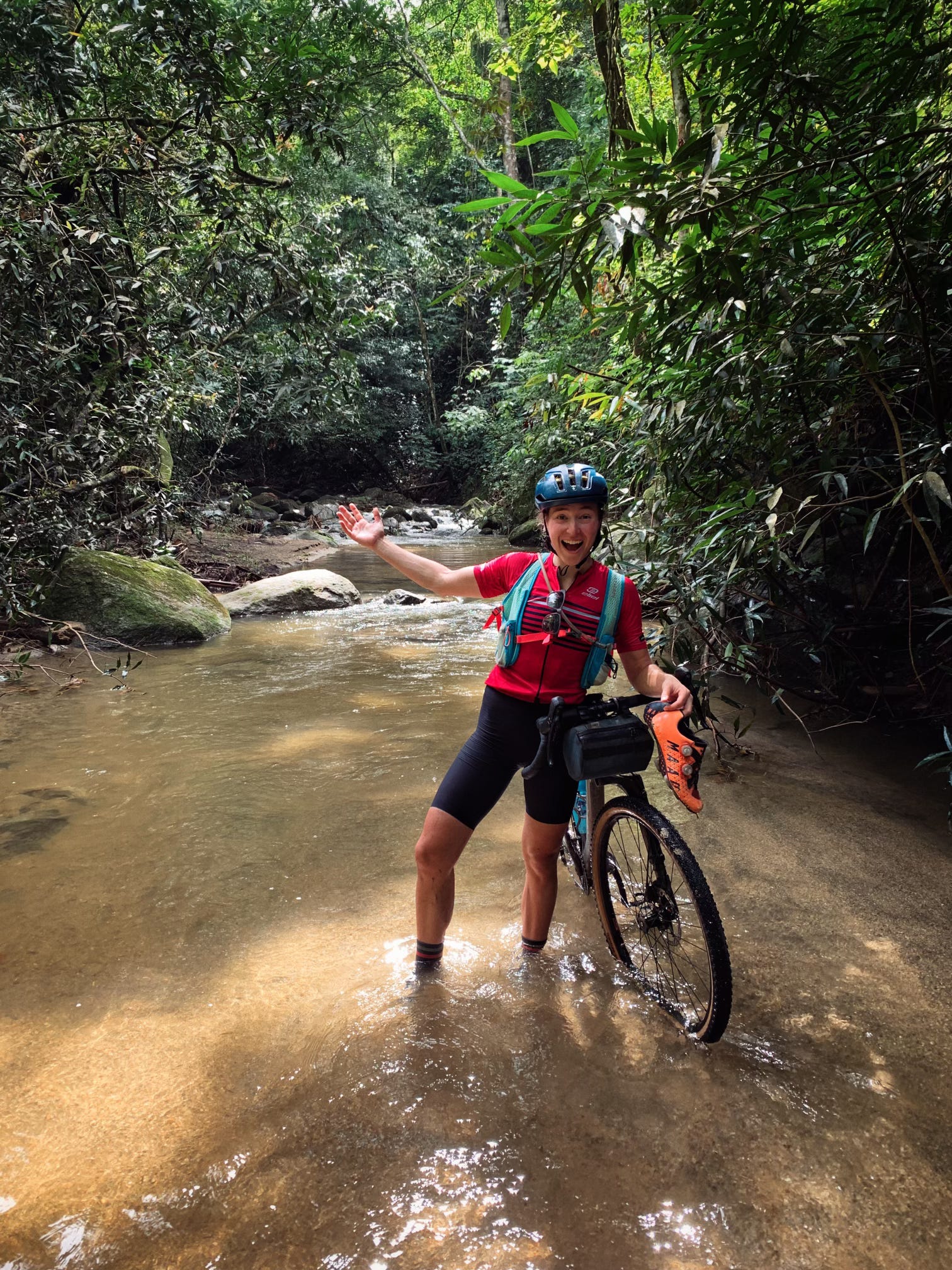
Every time I come across one of Melissa Teeple’s social media posts or stories, I have to stop and tune in. Not just because of the stunning backdrops—Colombian mountains, Midwest farmland, some small town I’ve never heard of—but because she’s always in the middle of something quietly remarkable. A solo bike ride through unfamiliar hills. A rescued dog with deep-seated trauma. A parrot that needs daily treatments and careful handling. Or a quiet moment reflecting on a conversation with an elderly neighbor—about loss, about land, about what makes a life meaningful.
Teeple, 30, is a cyclist and professional pet sitter who doesn’t shy away from difficult animals—or tough conversations. She’s curious, fiercely independent, and deeply observant. She’s often drawn to older people in the places she visits—not out of sentimentality, but because she’s searching for something tried and true. In their time-earned wisdom, she finds guideposts—fragments of lives lived fully, or at least honestly. For Teeple, those exchanges are more than small talk; they’re a map for how to keep going.
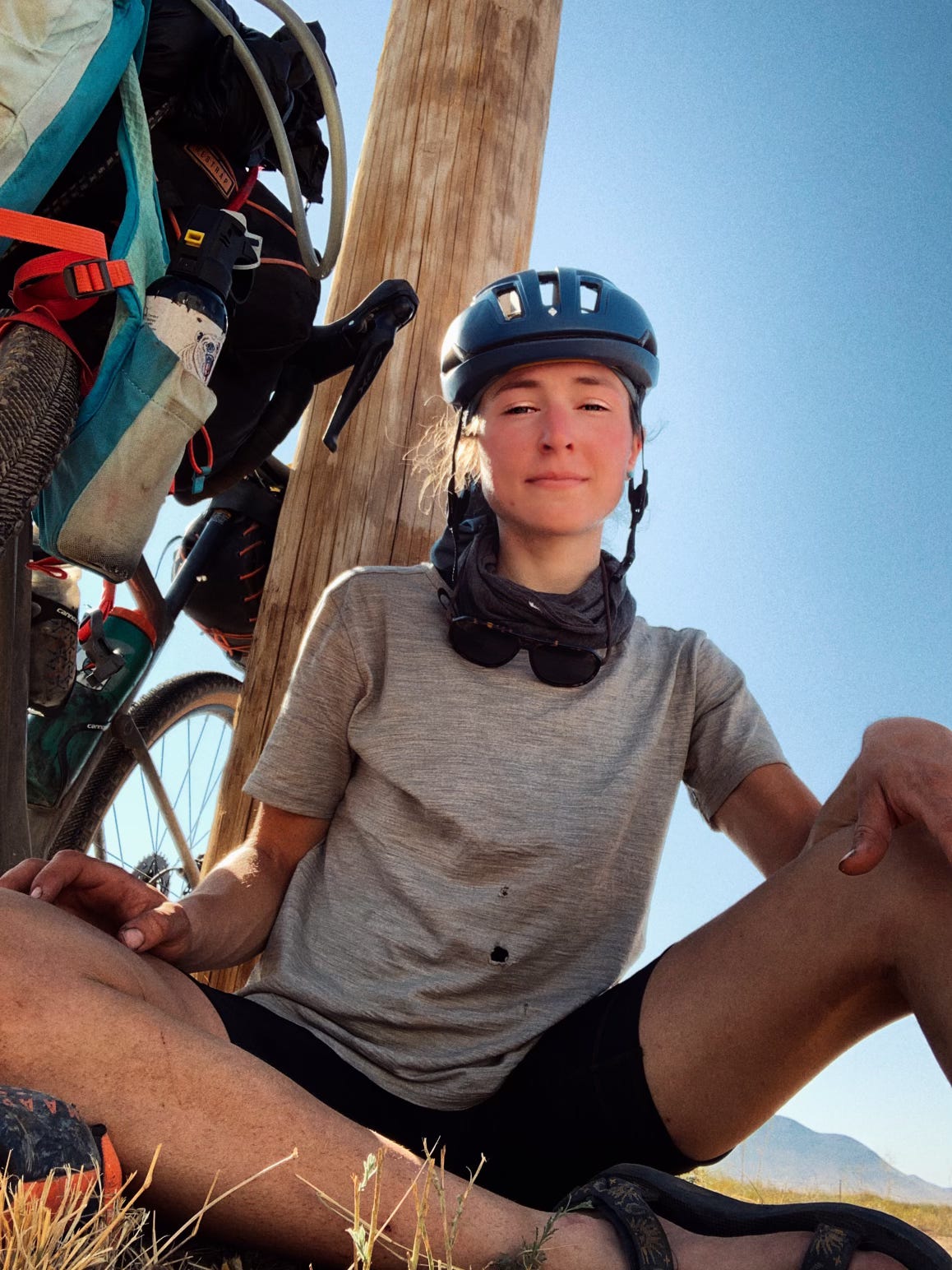
And she doesn’t just ride bikes—she lives on one. From backroads in Virginia to dirt climbs in Cuba, she’s built a life of constant movement, chasing the quiet kind of freedom most people only dream about. She’s slept in her van, biked the Tour Divide solo, learned Spanish by befriending locals, and rebuilt her body after a race-day fracture that nearly ended everything.
Teeple discovered endurance sports by accident, and like most things in her life, she pursued it with a raw and relentless kind of self-determination. She became a triathlete, raced at the edge of professionalism, and rode for semi-pro teams on her own terms—often as a guest rider, refusing to sign contracts or support teams that didn’t offer real support. When the system didn’t quite make room for her, she carved out her own lane instead.
These days, she’s still on the road—pet-sitting, training, dreaming of building something bigger for women in sports. She talks about bikes, yes, but also burnout, ethics, broken systems, healing, and joy. She’s tender and tough in equal measure and more likely to offer you a philosophical riff on connection than a race result.
In honor of Women’s History Month, we spoke with Teeple about growing up in a place where no one rode bikes, the teachers and strangers who helped her believe she could, and what it means to stay soft in a world that rewards only the hard.
Where did you grow up, and how did you get into sports in the first place?
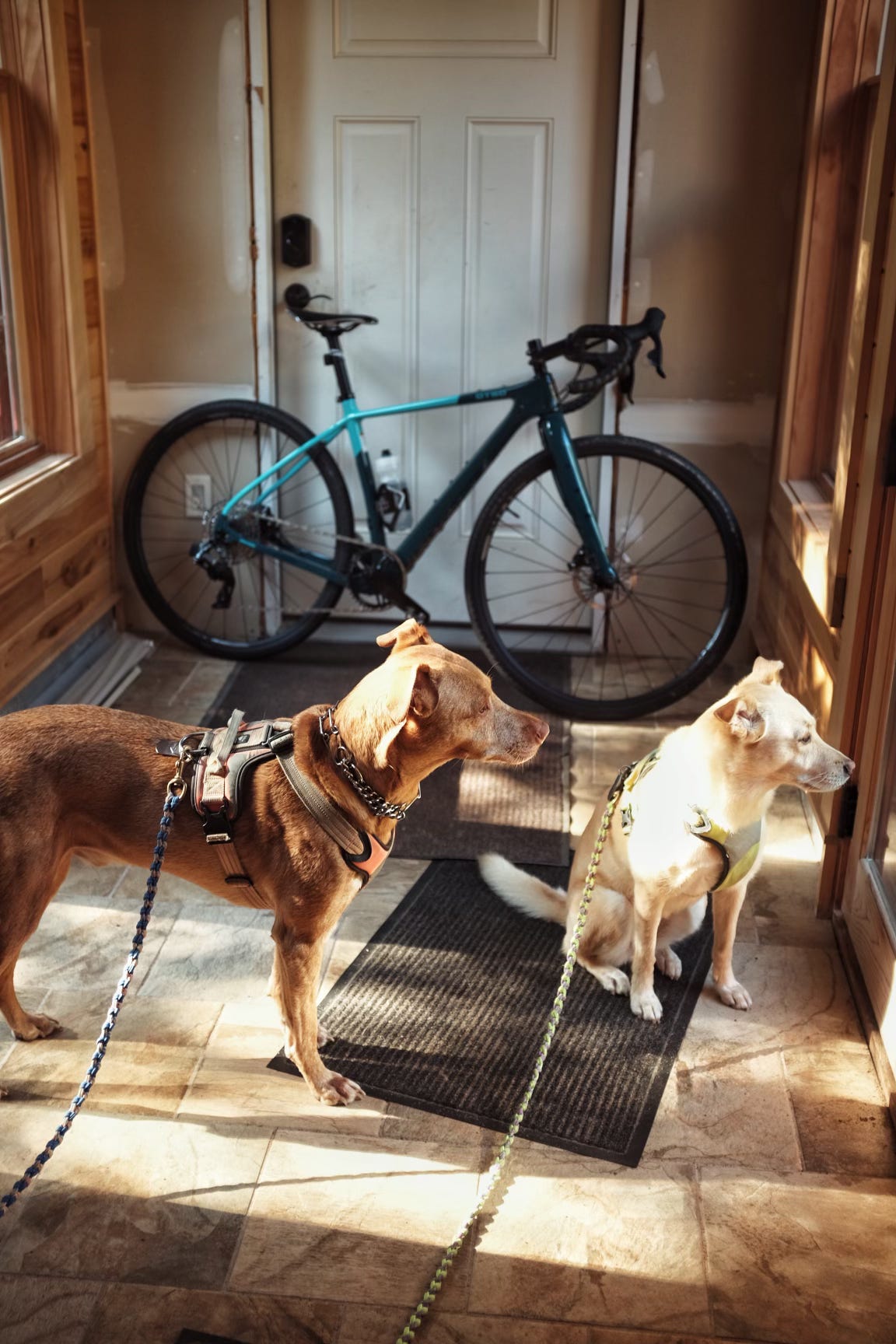
I was born in Maryland, but my family moved to Franklin County, Virginia, when I was eight. We lived on a farm a mile down a gravel road. My parents were older than most. After retiring from his primary career, my dad had to reinvent himself to support our family—he took a job as a locksmith simply because it was what was available. My mom ran the household and continued teaching when her schedule and body allowed; she was still managing chronic pain from an auto accident caused by a driver who had fallen asleep at the wheel more than a decade earlier.
We didn’t do sports at all. But a gym teacher saw something in me—he’d been tracking mile times in elementary school—and, in eighth grade, he called my parents and said, “Your daughter should run.” So, I started cross-country with the high schoolers. It wasn’t something I ever imagined for myself.
How did that evolve into triathlon and, later, cycling?
I was curious. One day, I googled “how to get better at running,” and the word “triathlon” came up. I didn’t know how to swim or ride, but I decided to figure it out. I started with a two-week summer swim program at the YMCA—that’s the only reason I was allowed on the school swim team. I learned just enough to fake it. I couldn’t do freestyle or a flip turn or even put my head underwater properly, but I could fudge my way through a 50. That same summer, I joined the team and kept showing up. The next season, they told me I wasn’t good enough to compete, but I stuck with it. Eventually, I held my own.
As for biking, we didn’t grow up riding. There were a couple of old kids’ bikes in the garage, and my sister taught me how to ride when I was little, but we’re talking maybe five-minute rides a few times a year—nothing serious. But there was this group of older folks who rode together out of a church nearby. My dad saw them one day and stopped to ask what they were doing. They told him to bring me out, that they’d teach me how to ride. My seventh-grade teacher believed in me and ended up buying me my first real bike. That changed everything.
You earned your pro triathlon card in college. What happened after that?
Yes, I qualified in 2017 but didn’t take the card right away. Then, in November of that year, I fractured my pelvis mid-race. I didn’t even know it happened—my leg just stopped working, and I dragged it through the last few kilometers. Quitting wasn’t even remotely an option, in my head or the coaches’ or school’s. I was encouraged to finish—that’s what I was “supposed” to do. I had already qualified for regionals, and the expectation was to keep pushing through.
They thought it was a pulled muscle. I was in constant pain, but they had me keep training. Since my leg wasn’t working, they gave me workouts to try until we found one I could force myself through. Jump-roping was that, so I did it. Not because it felt right but because it was what was expected of me—and I didn’t know how to advocate for myself or even recognize how bad it was.
Three weeks later, I couldn’t walk. It turned out I had fractured my pelvis in two places. Later, I found out I also had fractures in my lower back.
Looking back, it was probably RED-S—low energy availability, overtraining, and under-fueling. At the time, I didn’t have any understanding of eating disorders or how they show up in athletes. I just thought I was doing what I needed to do to keep my scholarship, protect my future, and meet everyone’s expectations. I’d been pushing my body to its edge for years.
I never got a real diagnosis. The school controlled the doctors and PTs I saw. It was all about getting me back to racing as fast as possible. It took over two years to heal.
Was that when you fully transitioned into cycling?
Pretty much. Swimming aggravated the injury, and I wasn’t a strong enough swimmer to go pro in that discipline. Running was out. Cycling made the most sense for my body and my situation. And I loved it. It felt freeing. I started racing more seriously in 2019—nationals, crits, Intelligentsia Cup in Chicago. Then, in 2020, I raced Vuelta a Colombia, which was wild because I’d just done the Tour Divide solo in 21 days.
You’ve been traveling with your bike ever since. How do you make it work financially and logistically?
I’ve been pet-sitting for over 10 years. That’s how I fund my life—housing, food, travel. I started in college, and it’s allowed me to move around, take my bike with me, and train in places I’d never afford otherwise. I bought a van in 2019. Sold my car, packed up, and started figuring it out. I’ve never signed a team contract that didn’t pay. I’ve guest-ridden for a few teams, mostly privateer-style, which barely exists in road racing. But I’d rather hustle than sell out.
You’ve cycled in six countries. What made you start traveling internationally—and alone?
My first big trip was to Texas and then Mexico during college. I’d just transferred schools, had gone through all the injury stuff, and I needed to get out. I borrowed a minivan and drove south. Ended up staying almost a month in Mexico. It was the first time I felt free—like I could just be me. Nobody knew me. There was no script. I overstayed my trip, missed some school, but I didn’t care. That trip changed my life. From that point on, I was like, how do I keep doing this?
You also taught yourself Spanish. How?
Just by being there. Sitting with people, trying to talk, listening to grandmothers, eating meals with families. I never took a class. I still speak it kind of badly, especially now that I haven’t been in Latin America for a while. But it’s important to me. It’s not about being perfect—it’s about connecting.
What are your favorite places you’ve biked through?
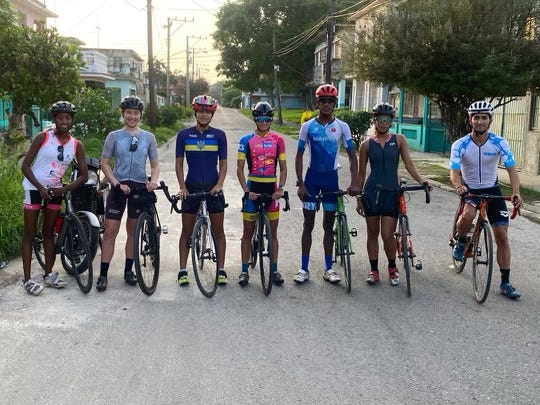
Cuba and Colombia. And honestly, small-town USA. People always want a flashy answer, but Virginia and West Virginia are endlessly fascinating to me. The landscapes, the contradictions, the kindness. But yes, Colombia has my heart. It’s green and hilly, and people are present. They sit on porches, visit their grandparents, and talk to strangers. There’s still a sense of slowness and rootedness there that I crave.
What kinds of conversations do you find yourself having with people on the road? And why are conversations with older people especially important to you?
A lot of the people I meet on the road—especially the elders—carry so much history. They’ve seen things change, and they’ve often stayed in the same place, which is different from how I live. They know what the land used to be, what the town used to be, how things used to feel. Just sitting with them, I learn so much.
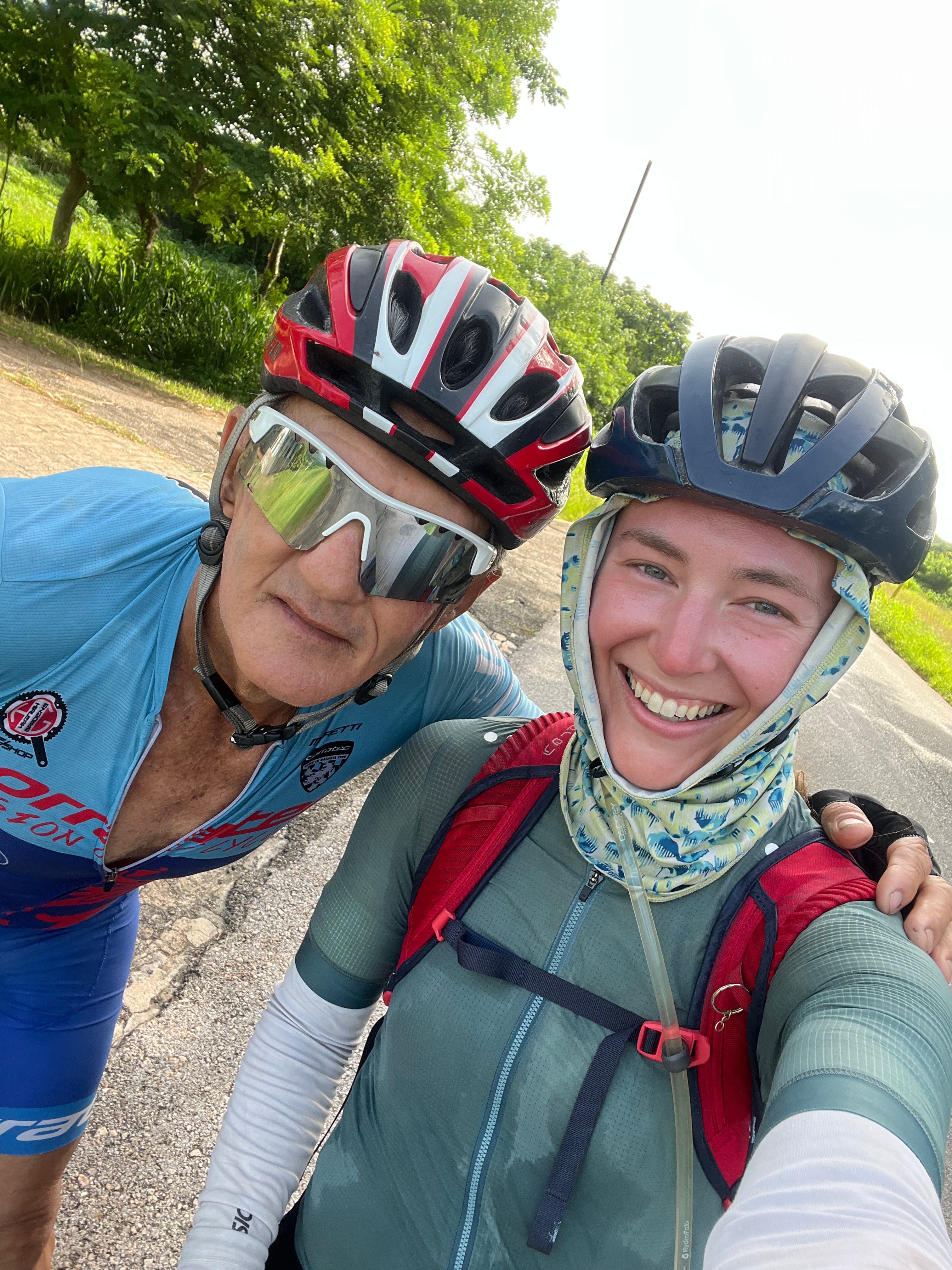
I’ll bike through a town and end up on someone’s porch drinking passion fruit, mango juice, or liquor and listening to them talk about where their grandparents lived or who still brings food to whom. It’s not always some deep thing—sometimes it’s just being there. People are usually generous with their stories if you show up open. That’s what I love.
“New day, new town” is kind of my internal slogan. I just go somewhere and start riding. And yeah, I’m trying to talk to the 80-year-old grandmother I meet on the side of the road. I think I’m interested in what happens before words. Like, what’s left when you don’t speak the same language? That’s where love lives, for me.
This lifestyle—nomadic, solo, self-funded—can’t be easy. What’s been the hardest part?
People always ask me how I do it, and the truth is, it’s not the lifestyle that’s hard. What’s hard is what I haven’t figured out for myself yet. What I want. How to live my values in a world that doesn’t always reward them. I’ve built a life I love. I don’t question that. But I’ve also been cut out of a lot of opportunities because I won’t compromise. There’s more doping in cycling than people admit. There’s ego, exploitation. I just can’t play that game.
And then there’s impermanence. You can build deep relationships, but they’re different. When you’re always new, always passing through, you don’t get the same kind of community. It gets lonely.
How do you stay safe—especially as a woman traveling solo with your bike?
I always get that question. And the truth is, I don’t have a super strict system—but I also take safety extremely seriously. I’ve spent a lot of time learning, listening to people who teach safety professionally, and reflecting on my own lived experience. I know that if something were to happen to me, it wouldn’t be because I wasn’t prepared—it would be because we live in a world that harms and kills women for existing.
That said, it’s a mix of trusting your instincts, learning from experience, and being hyper-aware without being fearful. I’ve gotten good at reading people and situations quickly. And I always try to connect with locals—that’s probably my biggest safety tool. When people know you’re not just passing through like a tourist, when you show up with care and respect, they look out for you.
As for my bike, I sleep near it, keep it inside, and build routines around it. It’s my whole life. You figure out how to protect what matters to you.
And I’ll say—my bike is all black. My kit is usually basic or all black, too. I don’t wear logos, and when riding solo, I try not to look flashy or like I have expensive gear. I want to blend in. It’s not about fear—it’s about not making yourself a target. You learn little things like that. It’s just part of the life.
What drives you to keep doing it, even when it’s hard?
Curiosity. And love. That’s my life philosophy: How do I extend love to the person next to me, the tree, the animal, the world? I grew up feeling like an outsider, and I wanted to connect. And the only way I knew how was to strip everything away and put myself in new situations—ones I couldn’t control.
How has your relationship with sport changed over time?
The first 10 years were all about hardening. Being fierce, doing more, pushing through pain. That’s how I survived. But the last 10 years? I’m trying to soften. It’s a whole new journey. Learning to be tender with myself and others. It’s painful sometimes, but it’s also beautiful. And it’s a gift.
Thanks for reading. Sharing stories like Melissa Teeple’s and Linette Messina’s reminds me why I do this work in the first place—to celebrate people who make bold, often quiet choices that challenge the norm. I hope these conversations stick with you like they’ve stuck with me.
If you want to reach out to Melissa—for pet sitting, travel questions, or just to say hey—you can find her on Instagram at @twowheeledteeps or through her website at melissateeple.com.
Melissa is my daughter. She constantly amazes me. Not just for her desire to try anything, but that she meets people with an open heart even when the world has not always treated her the same.
I wish she would write a book to share more experiences and some of the amazing photos she has taken. Wishing you everything you dream of and for!
Incredible article about an incredible young lady. Melissa left out the details of her first biking experience. I was her seventh grade teacher as well as one of the “older” folks 🤔 that invited her to come ride with the group. She showed up with an old and very HEAVY mountain bike planning to ride a 16 mile course on the mountainous backroads of Callaway. I was going to be “nice” and hang back to ride with her, assuming we might only make it a few miles before her mountain bike became too much for her. After about 4 miles it became VERY apparent that I did not need to hang back to ride with her as she was now in front of me (I was on a nice full carbon road bike) and she’s talking nonstop with little to no exertion as I’m starting to gasp for air. I was a strong intermediate rider but quickly realized Melissa was definitely a beast to be reckoned with. The following week I suggested that she ride with the “fast guys” because I knew she was ready for the challenge. After she was able to hold her own with that group, while still riding her old heavy mountain bike, I knew she would be unstoppable with a true road bike so we went shopping!! It didn’t take long before she was having to wait at the top of every big climb for the “fast guys” to catch up with her 😂. I am, and have always been, so proud of what Melissa has accomplished, both on and off the bike.